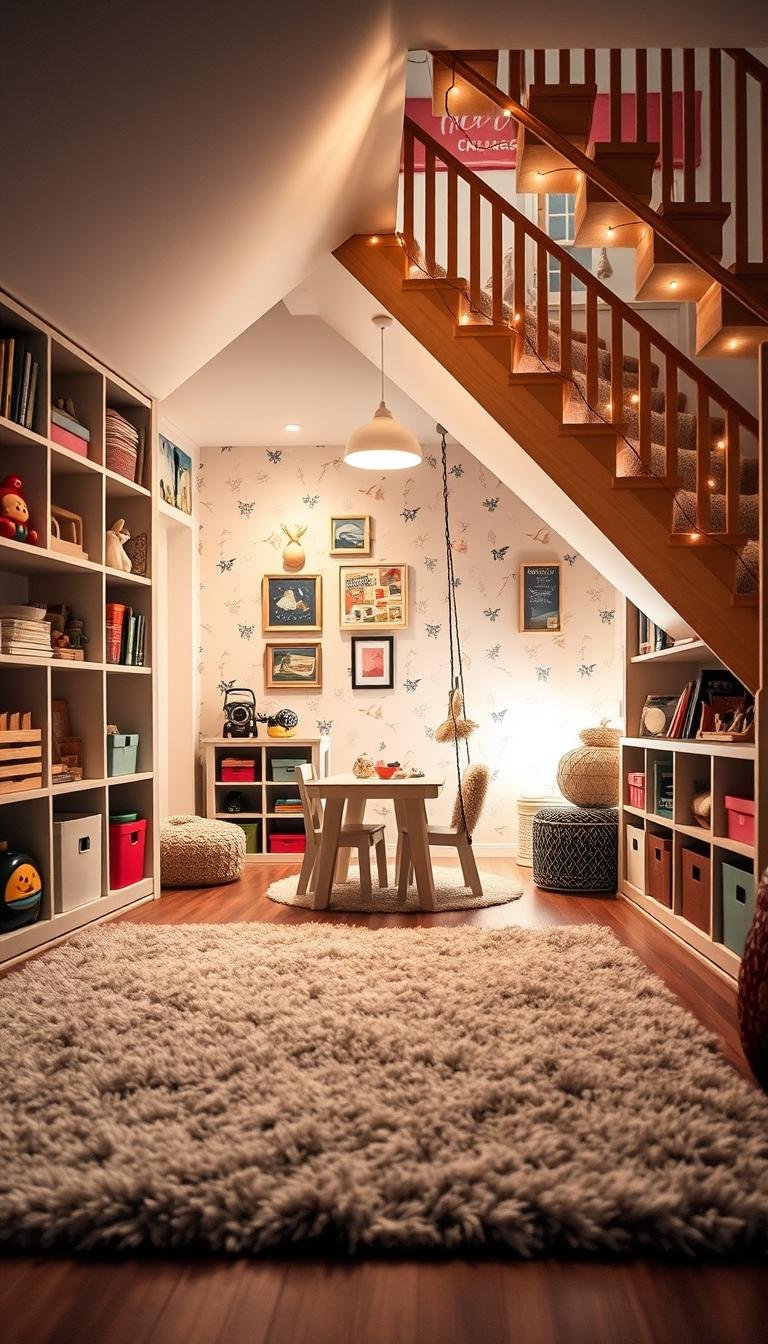
Last weekend, I watched my friend’s daughter disappear beneath the staircase with her favorite teddy bear. She emerged hours later from her makeshift fort, beaming with joy. That’s when it hit me – that forgotten nook could become something magical!
We’ve all walked past that awkward space beneath our staircases countless times. It often becomes a catch-all for holiday decorations or dusty storage boxes. But what if we told you this overlooked area could transform into your child’s favorite spot in the entire house?
In this guide, we’re sharing 15 incredible ideas to convert that triangular space into a kids hideaway that sparks imagination and creates lasting memories. From cozy reading nooks to miniature playhouses, these staircase playroom concepts maximize every inch of your home while giving little ones their own special territory.
Whether you’re working with a spacious area or just a tiny alcove, we’ve gathered inspiration for every home style and budget. These under-stairs playroom designs don’t just look amazing – they support creative development while keeping toys contained in one dedicated zone!
Ready to discover how that unused corner can become the most beloved spot in your home? Let’s explore these genius transformations together!
Contents
- 1 Maximizing Forgotten Spaces: The Magic of Under-Stairs Nooks
- 2 Essential Planning Tips Before Creating Under Stairs Play Areas
- 3 Magical Themed Under-Stairs Playrooms
- 4 Educational Under Stairs Play Areas for Little Learners
- 5 Active Play Under-Stairs Designs for Energetic Kids
- 6 Practical Multi-Purpose Under-Stairs Playrooms
- 7 Tech-Friendly Under-Stairs Entertainment Zones
- 8 DIY vs. Professional Installation: Making the Right Choice
- 9 Conclusion: Creating Lasting Memories in Under-Stairs Hideaways
Maximizing Forgotten Spaces: The Magic of Under-Stairs Nooks
Under-stairs nooks are often overlooked but hold great promise. They can become cluttered or dusty, hiding their true value. Turning these areas into play spaces delights kids and adds value to your home without using more space.
Why Under-Stair Spaces Make Perfect Kid Zones
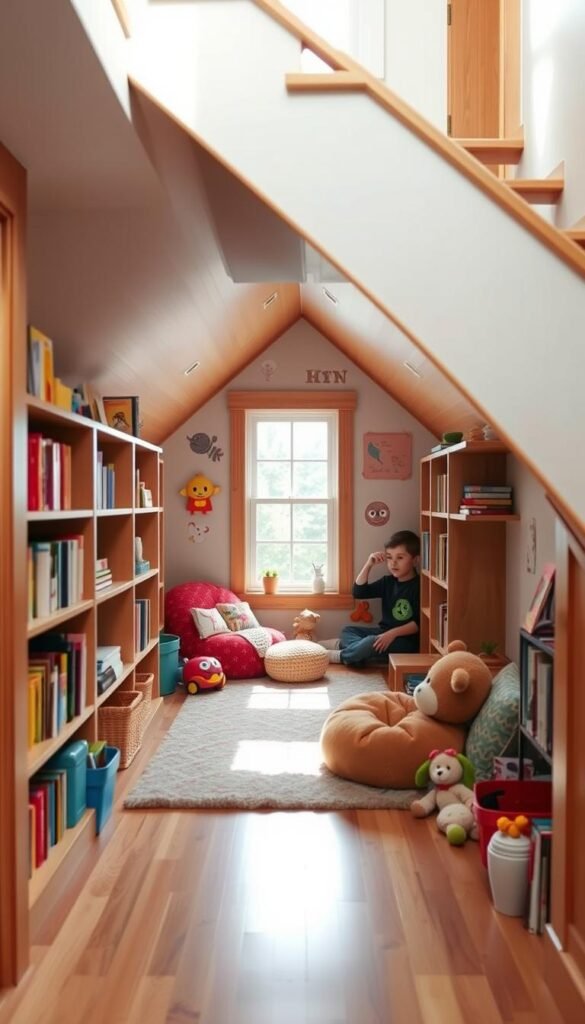
Children love small, enclosed spaces that feel like their own. Under-stairs areas naturally fit this bill, creating a cozy fort-like environment. Interior designer Sarah Thompson says,
“Children seek out cozy, defined spaces that feel separate from the adult world—it’s why they build blanket forts and hide in closets.”
The sloped ceiling of an under-stairs nook makes it feel like a cave. This is exciting and protective for kids. These spaces are safe and give kids a sense of independence. Plus, they’re close enough to parents for supervision.
Benefits of Creating Dedicated Play Spaces
Turning under-stairs into a kid zone has many benefits. It supports child development and makes home management easier.
Developmental Advantages
Dedicated play spaces help kids grow in many ways. They:
- Enhance imagination – Special environments spark more creative play
- Develop a sense of ownership – Kids learn to care for their space
- Improve concentration – Defined spaces reduce distractions
- Build social skills – These areas become natural meeting spots
Child psychologists agree that the environment affects how kids play and learn. An under-stairs playroom offers the right mix of safety and stimulation.
Space-Saving Solutions for Modern Homes
In today’s homes, space is precious. Under-stairs nooks offer practical benefits:
- Keep toys organized in one place
- Use space that would be wasted
- Add unique interest to your interior
- Be adaptable as children grow
These kid zones help you keep your living room tidy. They give children the space they need. The magic of under-stairs playrooms is turning dead space into a beloved spot.
Essential Planning Tips Before Creating Under Stairs Play Areas
Turning the under-stairs area into a play space needs careful planning. It’s important to think about safety and function before decorating. Here are the key planning tips for a successful project.
Measuring and Evaluating Your Available Space
Under-stairs areas are tricky because of their shape and height. Start by measuring the space carefully. Include:
- Width and depth at different points
- Ceiling height at both the tallest and shortest ends
- Location of any electrical outlets or vents
- Structural elements that cannot be modified
Remember, the space you can use might be less than the total area. A simple diagram with measurements helps plan furniture and activities.
Critical Safety Considerations
When designing a children’s space, safety is the most important thing. Proper play area safety measures are essential for peace of mind.
Childproofing Essentials
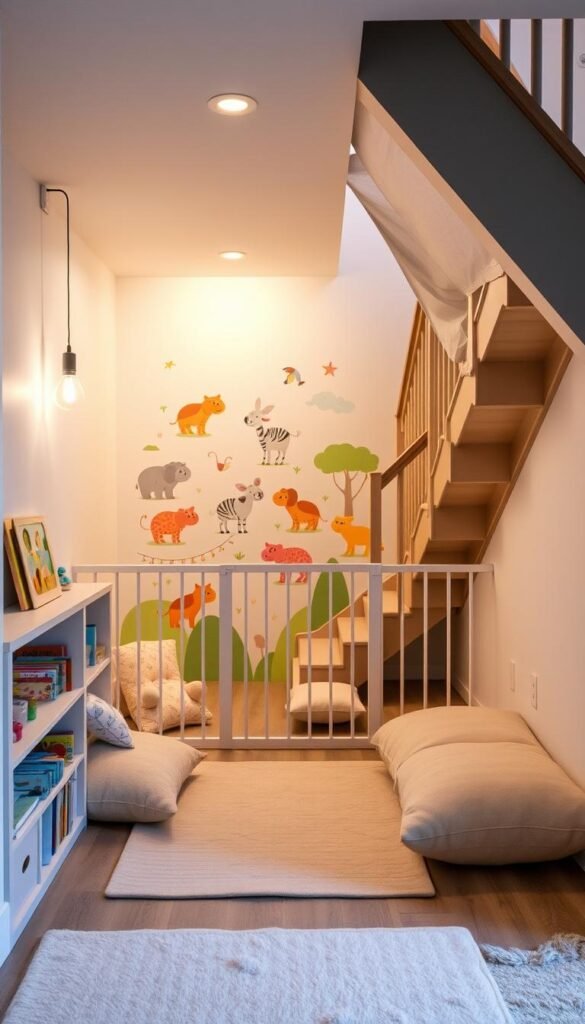
Thorough childproofing is a must for under stairs play areas. Use outlet covers and secure wires. Add corner protectors to sharp edges.
Anchor furniture to prevent tipping. Make sure there are no hazards under stairs, like exposed nails.
Proper Ventilation and Lighting
Under-stairs areas often lack light and air. To fix this, consider:
- LED strip lighting along the ceiling line
- Small wall sconces that don’t protrude into play space
- A small, child-safe fan if ventilation is limited
- Motion-sensor lights for energy efficiency
Good lighting makes the space inviting and prevents eye strain.
Setting a Realistic Budget
Your under-stairs playroom doesn’t have to be expensive. Start with safety features and then decorate and furnish.
DIY setups cost $200-$500 for basics. Professional setups start at $1,000 and can go up to $3,000 for custom work.
Save by using what you already have or finding secondhand items. Spend more on flooring and lighting for comfort and usability.
Magical Themed Under-Stairs Playrooms
Turn that awkward under-stairs space into a themed playroom. It will take your kids to magical places. Themed playrooms are not just about space. They create worlds where kids can dream and make memories.
Let’s look at three designs that make under-stairs spaces into amazing places.
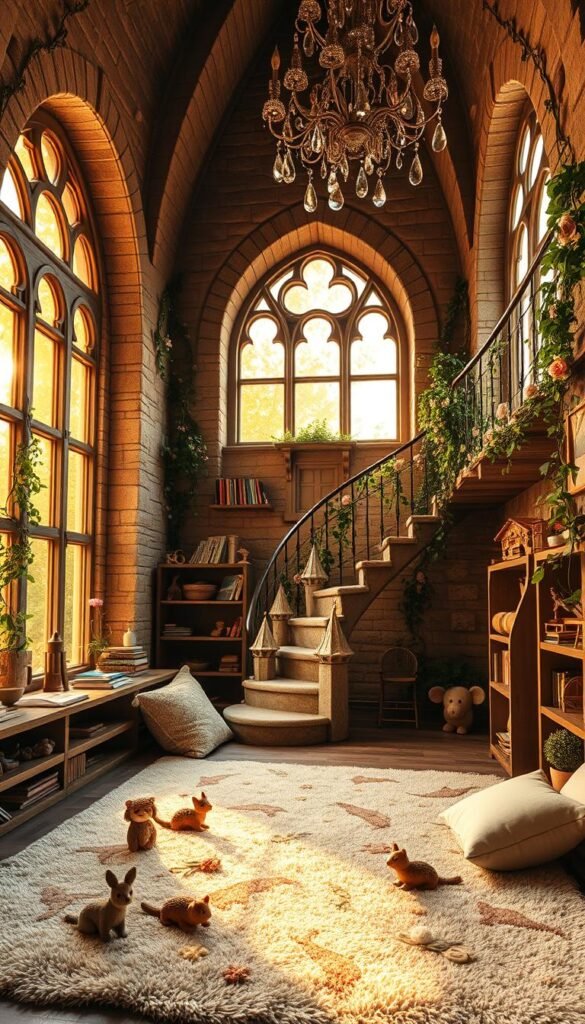
Idea #1: Enchanted Fairy Tale Castle with Turrets
Make a royal place for your little ones. A fairy tale castle playroom brings stories to life. It has:
- Cardboard or wooden turrets that make the space look like a castle
- Soft tulle canopies from the ceiling for a dreamy feel
- Fairy lights for magical light
- Crown molding for a royal look
Paint castle windows and stones on the walls for a budget-friendly look. Use removable wall decals for changing themes. Add plush velvet cushions and a throne for a royal feel.
Idea #2: Outer Space Adventure Station with Star Ceiling
Take your child’s imagination to space. This playroom turns the under-stairs into a spaceship command center:
- A star-studded ceiling with glow-in-the-dark paint or stars
- An old keyboard as a control panel
- Planet mobiles for a 3D solar system
- Metallic paint or foil tape for space scenes
Use space-themed bins for toys. Add a tablet for space videos or games. The stairs’ slope makes it feel like a spaceship cockpit!
Idea #3: Woodland Creature Hideaway with Mushroom Seats
Bring the forest inside with a nature-inspired playroom. It feels like a fairy tale forest:
- Mushroom seats from round cushions with spotted fabric
- Leaf-pattern cushions and botanical prints for texture
- Tree branch decals for a forest canopy
- A green carpet or rug for an outdoor feel
Make mushroom seats with foam cylinders and fabric. Add woodland animals and nature books for a cozy forest feel.
These themed playrooms fit any under-stairs space and budget. Focus on key elements for the theme. Simple touches can make a big difference.
Educational Under Stairs Play Areas for Little Learners
Creating educational play areas under stairs is smart. It uses space well and helps kids learn. These spaces can spark curiosity and creativity. They also make a great use of often unused space in your home.
Let’s see how to turn that triangular space into something special. It can grow with your child’s interests and skills.
Idea #4: Mini Library with Cushioned Reading Nook
Make a cozy reading spot under the stairs. It’s perfect for kids to love books. The sloped ceiling makes it a snug place for stories.
Use the top for bookshelves and the bottom for comfy seats.
Book Storage Solutions
Design your mini library to be easy to use. Front-facing bookshelves make it simple for kids to pick books. You can use rain gutters or special bookcases.
Use color bins for different books. It helps kids learn to organize. Swap out books seasonally to keep things interesting.
Comfortable Reading Spaces
A good reading nook is cozy but also useful. Start with a foam cushion that fits perfectly. Choose soft, easy-to-clean fabric in calming colors.
Add pillows of different sizes and textures. This makes the space fun to explore.
Good lighting is key for reading. Use adjustable LED lights that are bright but not harsh. For quiet, add fabric panels or curtains.
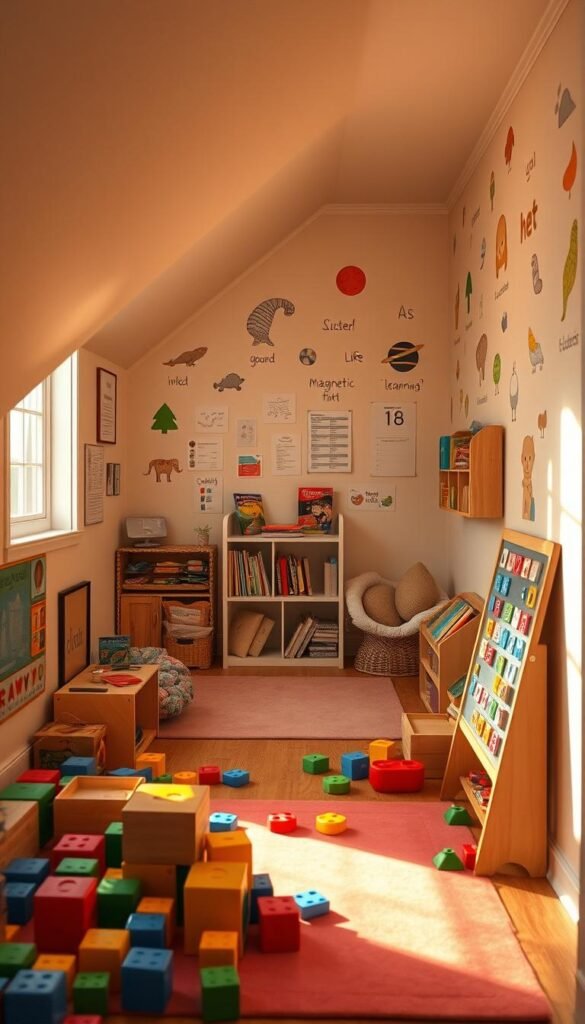
Idea #5: Art Studio with Gallery Wall
Turn the under-stairs area into an art studio. It’s a place where kids can be creative. Make it easy to clean and store supplies.
Use a stain-resistant surface for art. Laminate or vinyl tablecloths work well. Choose vinyl or washable rugs for the floor.
Use pegboards or wall organizers for supplies. Clear containers help kids pick what they need. The sloped wall is perfect for a gallery to display their art.
Idea #6: Science Discovery Lab with Nature Collection Display
Make the under-stairs area a science discovery space. It’s great for learning about nature. It helps kids observe and understand the world.
Set up areas for different collections. Use magnetic boards for rocks and shadow boxes for leaves. Add a shelf for microscopes and a tablet for apps.
For hands-on learning, have a small garden. Use clear containers to watch roots grow. Label everything and keep journals for notes.
These play areas are great because they can change as your child grows. The reading nook can get more books, the art studio new techniques, and the science lab more complex topics. Investing in these spaces now helps your child learn for years.
Active Play Under-Stairs Designs for Energetic Kids
Energetic kids need places to move around. The area under your staircase is perfect for active play zones. These spaces can be fun and safe, keeping your home looking good.
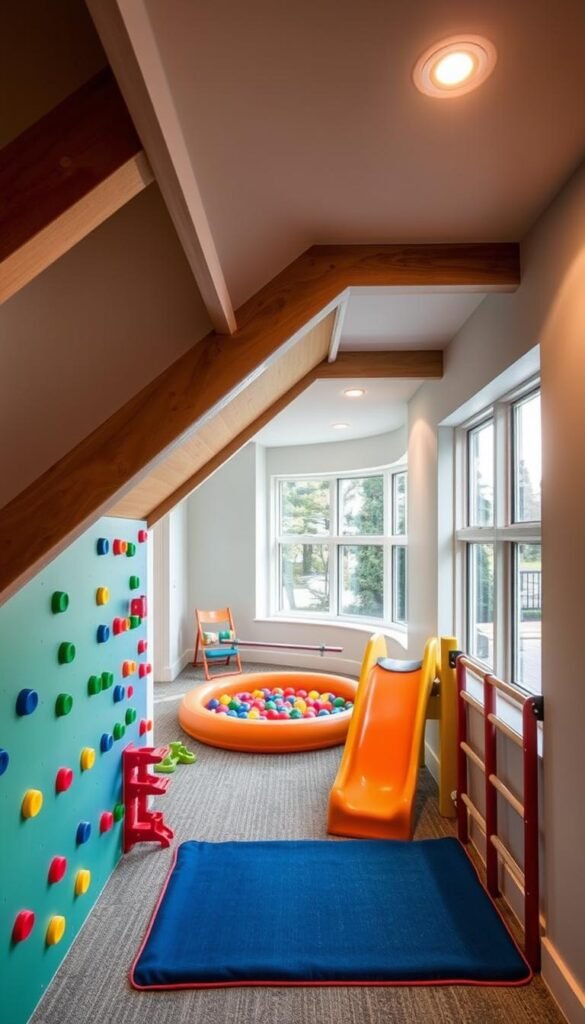
Idea #7: Miniature Climbing Wall with Safety Flooring
A climbing wall under your stairs turns vertical space into an adventure area. For toddlers, use big, colorful holds that are easy to hold. Older kids can tackle more challenging routes with different textures and sizes.
Make sure to anchor climbing holds securely. Use wall studs or toggle bolts for hollow walls. For young climbers, hold holds 8-12 inches apart. For more experienced kids, make the routes harder.
It’s important to have safety flooring. Interlocking foam tiles are great and can match your decor. For higher sections, use crash pads that can be stored away.
Idea #8: Ball Pit Paradise with Color-Coordinated Balls
A ball pit under the stairs is a hit with kids. The sloped ceiling helps keep the balls in. Use a clear acrylic half-wall or fabric netting to keep the balls in while letting kids see them.
Cleaning the ball pit is a big worry for parents. Use antimicrobial plastic balls and a mesh laundry bag. This makes cleaning easy and safe.
Choosing the right colors for the balls can make the ball pit look great. Pick colors that match your home or go for a rainbow effect. This is fun for kids and looks good for adults.
Idea #9: Slide and Tunnel Combination with Peek-a-Boo Windows
The slope under your stairs is perfect for an indoor slide. You can use a commercial plastic slide or make a wooden one. This adds a fun element to the space.
Add a tunnel at the slide’s base for more fun. Use fabric tunnels for easy storage or wooden ones with peek-a-boo windows. These windows make the tunnel feel less closed in and add to the play.
Make sure the slide and tunnel are safe. Pad any areas where kids might fall. Make sure the slide’s angle is right for your child’s age. This creates a fun under-stairs playground in a small space.
Practical Multi-Purpose Under-Stairs Playrooms
When space is tight, under-stairs playrooms are a smart choice. They grow with your child, serving many purposes. These spaces save room and adapt to your child’s changing needs.
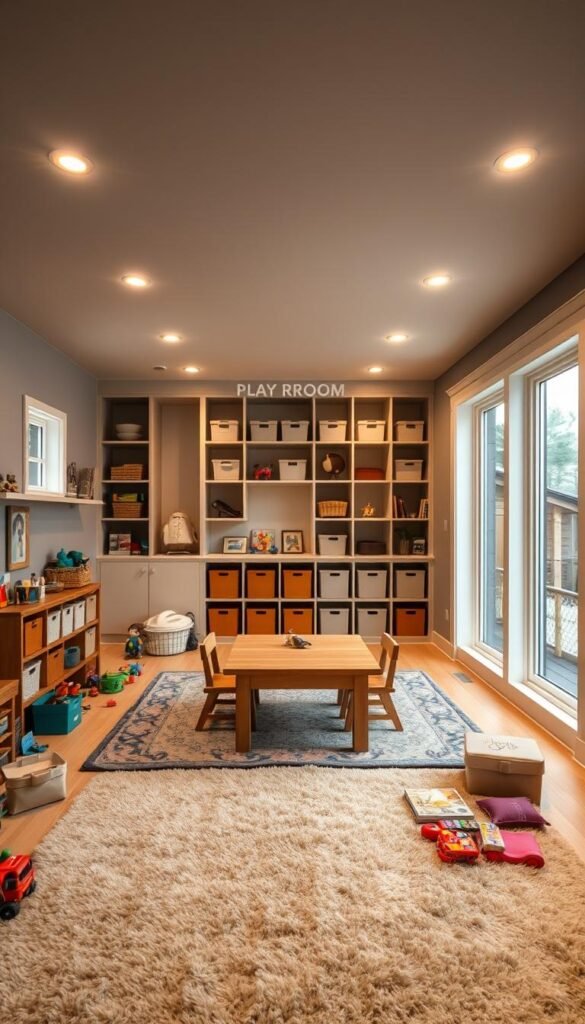
Idea #10: Play Kitchen with Real-World Features
A play kitchen under the stairs is a magical culinary world for kids. Unlike plastic ones, a custom kitchen can look like your real kitchen. Add a working sink for water play without mess.
Consider a chalkboard “menu” wall for kids to write. It’s a fun way to practice writing without realizing it.
Storage Solutions for Play Food
Smart storage in your kitchen teaches kids to organize. Use shallow drawers for play food and utensils. Label them with pictures for pre-readers.
Wall-mounted baskets or magnetic strips for metal playware save space. They keep things easy to reach.
Child-Sized Appliances
Under-stairs spaces are great for small appliances. Repurpose cabinets into mini refrigerators and ovens. Add working doors and LED lights for a real feel.
For a realistic touch, use oven knobs that click and a timer that dings.
Idea #11: Convertible Desk/Play Table Area for Crafts and Homework
A convertible table is versatile for kids. It changes from preschool crafts to homework. A height-adjustable surface grows with your child.
Use hidden storage beneath the table for quick changes. This space stays useful through many stages. Clear containers help kids keep things tidy.
Idea #12: Dress-Up Corner with Mirror Stage
Turn the space under your stairs into a theater. Use tension rods and clear shoe organizers for costumes and accessories.
A raised platform with a non-slip surface makes a stage. Mount shatterproof mirrors at child height for a complete experience.
“The best play spaces grow with children, challenging them at each developmental stage while providing a consistent sense of ownership and belonging.”
These playrooms are valuable because they adapt. As your child grows, you can change the space easily. The kitchen might become a science station, and the desk area a teen spot. All while keeping your home looking good.
Tech-Friendly Under-Stairs Entertainment Zones
The digital age has opened exciting possibilities for turning under-stairs nooks into high-tech entertainment zones kids love. While we advocate for balanced screen time, thoughtfully designed tech-friendly playrooms can provide both entertainment and educational value. Let’s explore how to create spaces that incorporate technology in age-appropriate ways while making the most of your unique under-stairs area.
Idea #13: Gaming Nook with Ergonomic Seating
A dedicated gaming nook under the stairs creates a contained space for digital play that’s easier to monitor than scattered devices throughout the house. Start with child-sized ergonomic seating that supports proper posture—mini gaming chairs or adjustable stools work wonderfully in tight spaces.
Position screens at eye level to prevent neck strain, using wall-mounted shelving or adjustable arms that can grow with your child. For the unique angles of under-stairs spaces, consider:
- Cable management sleeves that tuck wires safely away from curious hands
- Power strips mounted to the wall (not the floor) to avoid tripping hazards
- Ventilation solutions to prevent equipment overheating in enclosed spaces
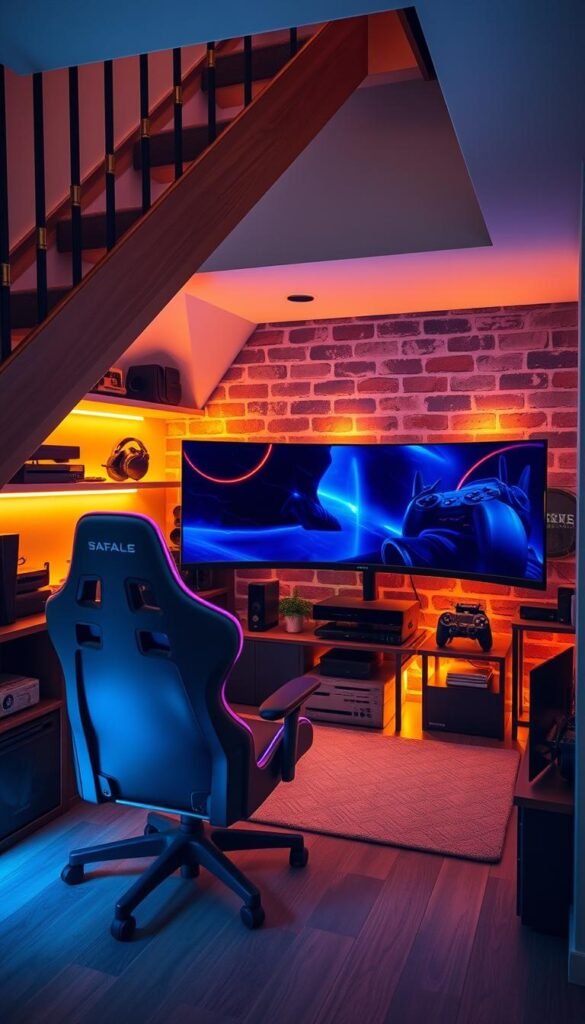
Idea #14: Mini Movie Theater with Projector Setup
Transform your under-stairs space into a mini home theater where family movie nights become magical experiences. The sloped ceiling of many staircase undersides creates a natural viewing angle that’s perfect for projection.
Screen Options
Your screen choice depends on your space constraints and budget:
- Portable projectors work well in smaller spaces and can be stored when not in use
- Wall-mounted tablets offer a budget-friendly solution for very tight spaces
- Retractable projection screens maximize versatility in multi-purpose nooks
Cozy Seating Arrangements
The awkward dimensions of under-stairs spaces actually work in your favor for creating cozy viewing spots:
- Floor cushions that stack away when not in use
- Bean bags that conform to sloped ceilings
- Mini fold-down theater seats for an authentic cinema experience
Idea #15: Music Corner with Instrument Storage
A children’s music corner under the stairs encourages creative expression while containing the joyful noise. Design built-in storage cubbies sized for different instruments, with soft-close features to protect little fingers and delicate equipment.
Consider sound management strategies like acoustic foam panels decoratively arranged on walls or plush rugs to absorb sound. For tech integration, include a small tablet station for music learning apps or a Bluetooth speaker for dance parties.
The beauty of these tech zones is their containment—they create natural boundaries for screen time while giving children dedicated spaces to explore digital creativity. We recommend incorporating a visible timer or light system so kids understand when tech time begins and ends, helping establish healthy digital habits from the start.
DIY vs. Professional Installation: Making the Right Choice
Deciding whether to DIY or hire pros for your under-stairs playroom is big. It impacts your budget, timeline, and the end result. Let’s look at both sides to guide you based on your skills and family needs.
When to DIY Your Under-Stairs Playroom
DIYing your playroom can save money and be fun if you’re careful. Go for it if:
- You know basic carpentry and have the right tools
- The project doesn’t need big structural changes
- Money is tight
- You like doing things yourself and have time
- The design is simple
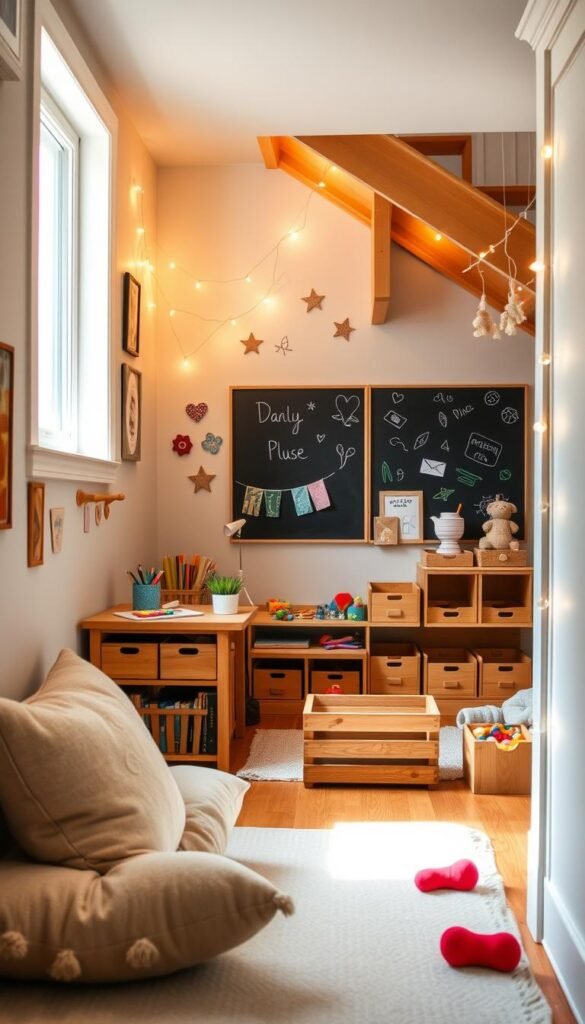
Start with easy tasks like painting, setting up bookshelves, or making comfy seats. These beginner-friendly DIY playroom tasks help build your confidence before tackling harder parts.
When to Call in the Professionals
Some under-stairs renovation tasks are better for experts. Choose professional playroom installation for:
- Big structural changes (like removing parts of the wall)
- Electrical work for lights or outlets
- Complex carpentry like custom built-ins
- Special finishes or features
- When time is short
When looking for pros, find ones with experience in kids’ spaces or custom cabinets. Always check their work and references.
Cost Comparison and Timeline Expectations
Knowing the costs and time needed for DIY or hiring pros helps set realistic goals for your project.
DIY costs $300-$800 for basic stuff and tools for a simple playroom. More detailed DIY projects can cost $800-$1,500. DIY takes 2-4 weekends, depending on your time and skills.
Hiring pros costs $1,500-$4,000 for a full playroom, with custom themes over $5,000. Pros usually finish in 2-5 days, lessening home disruption.
The best choice depends on your situation. Many choose a mix of DIY and pro work. Remember, the playroom costs are worth it for a space that brings joy for years.
Conclusion: Creating Lasting Memories in Under-Stairs Hideaways
Turning an under-stairs area into a magical hideaway is more than just using forgotten space. It becomes the setting for countless adventures and memories.
These spaces can be anything from fairy tale castles to science labs. They can even be cozy reading corners or climbing walls. Even the smallest area can spark a child’s imagination.
Creating these special spots takes time, creativity, and resources. If big ideas seem too much, start small. A simple reading spot can grow into something bigger as your child gets older.
The real magic of under-stairs hideaways is how they make kids feel. They offer independence while keeping them safe at home.
A perfect playroom shows off your child’s personality and interests. Whether you do it yourself or get help, seeing your child’s joy is worth it.
Ready to make your under-stairs area special? Measure, get inspired, and watch it become a favorite spot for your family’s memories.